Commercial Waste Removal in Manor Park

Commercial waste removal in Manor Park should be organised around the type of material, the amount to be cleared, and the way a business needs its premises left at the end of the visit. We handle a wide range of non-household waste streams, from routine office refuse to bulky items that need careful lifting and loading. The aim is to make disposal straightforward for workplaces that want a practical service rather than a one-size-fits-all solution.
For many customers, the most useful approach is a scheduled clear-out that removes surplus items in one visit and leaves the area ready for the next task. That can include desks, chairs, shelving, packaging, archive material, and mixed light commercial waste. Where useful, you can begin by reviewing our business waste removal service, which is designed for workplaces needing regular or one-off support with day-to-day waste.
Need a quotation? Tell us what needs removing, the access available, and any items that require extra handling. If your job is a simple clear-out, a short description is usually enough to begin. If there are heavier goods or mixed loads, mention those details so the right plan can be arranged. Clear information helps produce a more accurate estimate.
Everyday business waste and general clear-outs
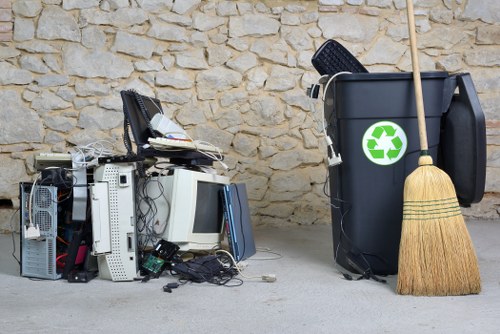 Many commercial customers need waste removed because stock, packaging, broken furniture or old equipment has built up faster than expected. We deal with mixed loads that are suitable for responsible collection and disposal, and we separate material where practical so recyclable items do not need to be treated as general refuse. That matters when offices, shops, workshops and other premises want the job completed with as little disruption as possible.
General waste removal can be arranged for a single room, a back store, a shared unit or a larger business site. The work may involve bagged waste, loose rubbish, damaged fixtures, dismantled fittings or accumulated items that are no longer useful. If you are comparing options for a broader clearance, our waste removal page covers the core service area and is a sensible starting point for straightforward commercial loads.
The most helpful information is usually practical rather than lengthy. A short note about what is being removed, whether access is level or restricted, and whether any items are especially heavy or awkward is enough to shape the visit. If you are ready to move ahead, request a quotation and we can help you decide on the right scope for the collection.
Office waste, furniture and workplace equipment
 Office clearances often include a mix of furniture, IT-related items, filing materials and general office clutter that has become difficult to store safely. We can remove desks, meeting tables, office chairs, cabinets and other workplace fittings as part of a planned collection. When the job includes furniture that has reached the end of its useful life, the focus is on safe handling and a tidy finish rather than simply moving items from one corner to another.
Some customers need a service that is more specific than a general rubbish collection. In those cases, separate destination pages can be useful. If the main task is commercial furniture, our furniture clearance service explains how seating, tables and larger items are handled, while the office clearance page is better suited to a broader workplace emptying or reorganisation.
It is also common for office jobs to include items such as printers, monitors, shelving and packaged archive material. We can deal with bulky pieces that need two-person lifting, and we can work through the load in a logical order so the clearance stays controlled. If your premises need a fuller handover, the overall plan can be shaped around the items that matter most to your business. Speak to us for a quotation.
Specialist disposal for bulky or awkward items
 Some commercial waste cannot be treated as ordinary bagged rubbish because of its size, shape or material. Bulky stock, damaged furniture, appliances and mixed hard items often require more careful handling than a simple sweep-up. The right disposal approach depends on what the objects are made from and whether they can be separated into different material types before final removal. That is why a descriptive enquiry is often more useful than a very brief one.
Where the load includes household-style items from a business premises, separate service pages can help narrow the request. Our fridge and appliance removal page is relevant for powered equipment, while the mattress and sofa disposal page is more suitable where upholstered or domestic-style goods form part of a commercial clearance. For a broader property emptying, the home clearance and house clearance pages describe related disposal work that may be useful for mixed contents.
When the waste includes long items, heavy pieces or goods with irregular shapes, planning the loading order is important. It reduces unnecessary lifting and helps keep the work site orderly while the clearance is in progress. If there are several types of item in the same job, list them clearly so the quotation reflects the actual work rather than a generic category. Use the contact option on the site if you want the quickest next step.
Clearance support for storage areas and back-of-house spaces
 Storage rooms, loft spaces, garages and back-of-house areas often hold the items that have been kept “for later†until they become difficult to manage. In a commercial setting this might mean surplus fixtures, old packaging, archived materials or broken equipment that has been set aside and forgotten. Clearing these areas properly allows the space to return to practical use, whether that means storage, access, or a new working layout.
There are separate pages for locations where the material is still within a property but not part of everyday business operations. If the job is focused on unused storage or an awkward upper-level area, our loft clearance and garage clearance pages offer more specific routes. For mixed contents from different parts of a premises, a fuller flat clearance may also be relevant when the load is not purely office-based.
These jobs are often easiest when the items can be grouped in advance, but the service can still be arranged around a mixed and untidy space. We can take away loose waste, packed items and redundant fixtures in a way that keeps the route out of the property as clear as possible. If the area contains more than one category of waste, mention that in your enquiry so the collection is planned sensibly.
Recycling and responsible handling
Commercial waste removal should not be treated as a simple tip-run. A good service considers what can be separated, what needs special handling, and what should be dealt with through the correct disposal route. That approach is particularly useful for mixed business loads, because offices and other workplaces rarely produce just one type of item. Packaging, paper, furniture and small equipment may all appear in the same clearance.
If sustainability matters to your organisation, it can help to choose a service that handles waste in a structured way. Our recycling and sustainability page gives a clearer view of how recyclable materials are considered as part of the disposal process. Where there is confidential paperwork, the confidential shredding page is the more appropriate route for sensitive documents that should not be mixed with ordinary waste.
It is sensible to separate a few obvious categories before a collection if you can do so safely: general rubbish, reusable containers, paperwork and bulky items. That makes the visit more efficient and helps avoid confusion once loading begins. We still need a proper description of the job, because not every item in a pile belongs in the same stream. Ask for a quotation if you want the waste dealt with in one organised collection.
About Manor Park
Manor Park is an area in the London Borough of Newham, in east London, shaped by its position between several long-established districts and transport corridors. The name is closely associated with the growth of the suburban railway age, and the locality developed significantly during the nineteenth and early twentieth centuries as housing spread outwards from central London. Its streets show a mix of terraced homes, later infill, small commercial frontages and community buildings, reflecting different phases of urban development rather than a single planned estate. One notable landmark is Manor Park station, part of the Elizabeth line, which has long linked the area with wider parts of the capital. The neighbourhood also sits near the expansive green space of Wanstead Flats, the southern section of Epping Forest, where open grassland provides an important contrast to the surrounding built environment. Local life is influenced by nearby shopping parades, schools, places of worship and everyday high street activity, with Romford Road acting as one of the best-known routes through the district. The area’s architecture includes examples of late Victorian and Edwardian housing alongside post-war redevelopment and more recent residential buildings, creating a varied streetscape. As with much of Newham, Manor Park reflects London’s layered history of transport, migration and rebuilding, and its character comes from the combination of local movement, residential density and access to wider parks and services.
Planning a collection that fits your premises
A commercial clearance works best when the collection plan matches the way the premises can be accessed. Ground-floor access, shared entrances, narrow corridors and loading restrictions all affect how the job should be organised. It is helpful to know whether items are already gathered together, whether they must be moved through occupied areas, and whether any parking or entry constraints apply at the property. These details support a more realistic quotation and reduce avoidable delays.
For larger or more awkward jobs, a little preparation makes the collection smoother without turning it into a separate project. If possible, identify any items that should stay in place, point out particularly heavy pieces, and let us know whether there are stairs, lifts or limited turning space. If the load includes a specific type of item, the relevant service pages can help you describe it more precisely; for instance, the builders waste clearance page is useful where renovation debris forms part of the job, while the garden clearance page suits outdoor waste from commercial grounds.
We keep the process practical: describe the items, describe the access, and choose the page that best matches the main category of waste. That approach helps avoid confusion when several different materials are involved. Request a quotation when you are ready.
Pricing factors and quotation details
[IMG_?]
Prices for commercial waste removal depend on the volume of material, the type of items involved, the effort required to load them, and any special handling needs that may apply. A pile of lightweight packaging is not the same as a room full of heavy furniture, and a one-off collection is not the same as a recurring workplace waste arrangement. For that reason, a clear description is the best starting point for any estimate.
Our pricing and quotes page is the natural next stop if you want to understand how a job is assessed before booking. Where the waste is more sensitive or unusually difficult, the hazardous waste disposal page may be relevant, but only where the material genuinely needs that level of handling. If the collection involves business documents, equipment or mixed contents, please mention that so the quotation reflects the correct service.
Choosing the right service page for your waste
Commercial waste removal in Manor Park covers a wide range of practical jobs, but different loads are easier to specify when they are described separately. That is why the site includes focused pages for common categories such as appliances, furniture, office contents and property clearances. Choosing the nearest match helps keep the enquiry accurate and makes it easier to discuss the job without unnecessary back-and-forth.
Useful pages include furniture disposal for individual items, builders waste clearance for post-work debris, and about us if you want to understand the broader business background. If you prefer to arrange the job directly, the book online page offers a convenient route for submitting the details of your clearance once you have decided what needs to go.
Before sending the enquiry, check whether the waste is mixed, bulky, fragile or located in a restricted area. Those details help determine the right approach and reduce the chance of omission. If you already know the main category, reference it clearly in your message. For a final quotation, use the contact page and tell us what needs removing.